 Gallery
trip info
Nice, a destination bathed in sunshine and culture
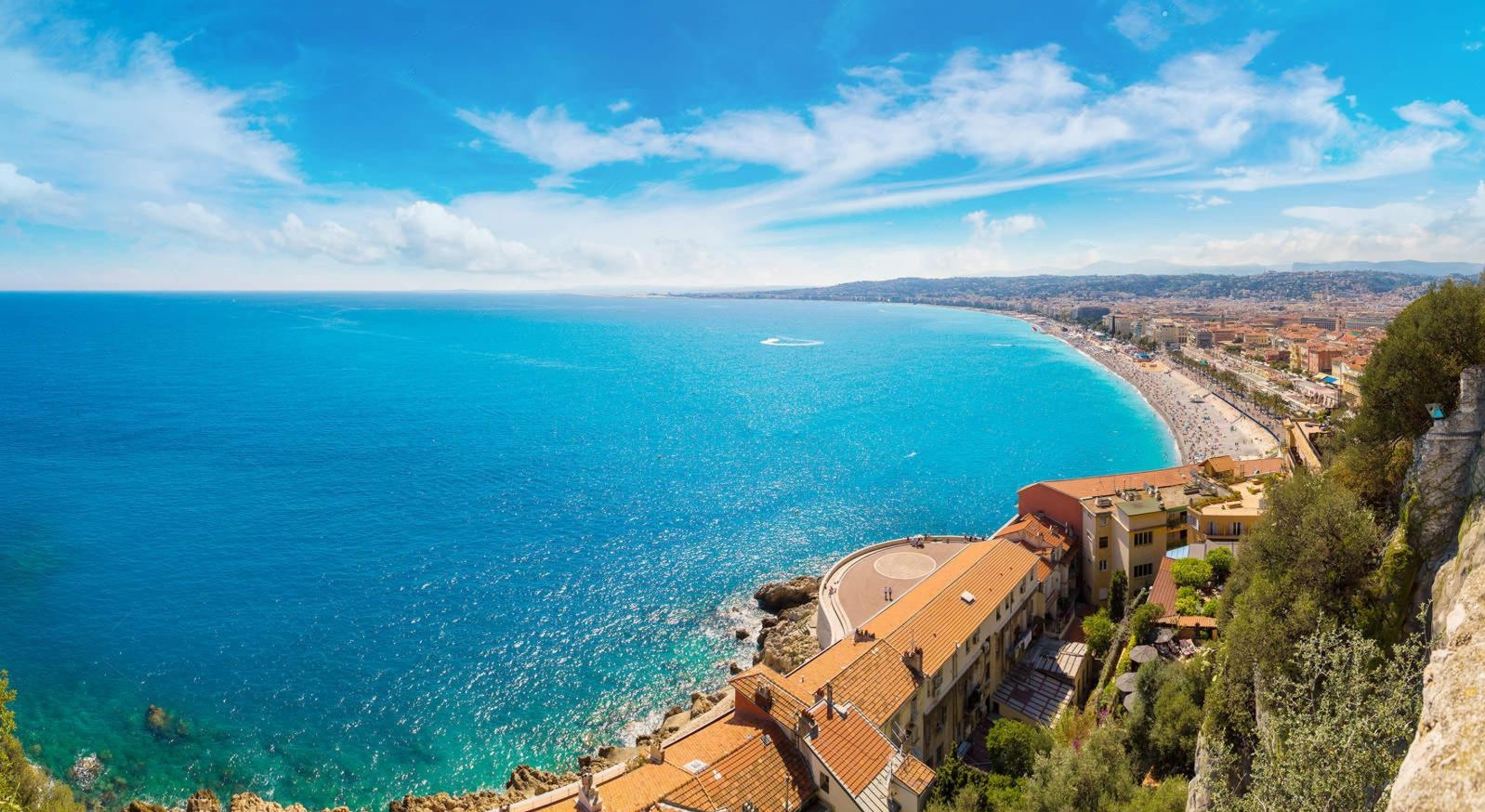
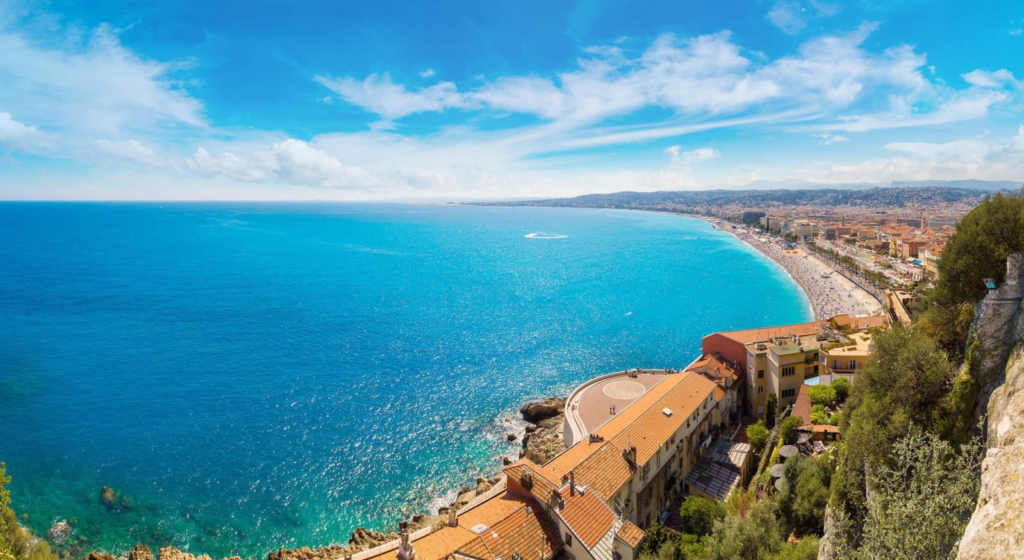
Are you looking for a destination that combines vibrant energy with the gentle Mediterranean way of life? Then look no further than Nice. Located in the extreme south-east of France, around 30 km from the Italian border, Nice is bordered by the Baie des Anges and benefits from protection from the winds thanks to the amphitheatre of hills surrounding it. The city is famous for its exceptional sunshine, with nearly 300 sunny days a year.
Nice is a land of artists and culture, renowned for its famous “painters’ light”, which captivated major artists including Matisse and Marc Chagall. It also has a strong identity, reflected in its iconic Nice Carnival and its cuisine, known as cuisine nissarde, one of the few culinary traditions in France to have its own official label. The capital of the French Riviera, the city is famous throughout the world for its Promenade des Anglais, listed as a UNESCO World Heritage Site, and its historic Old Nice district.

Your EDEN CAB driver will pick you up at 9:00 a.m. from your hotel, your address or the agreed meeting point. After a brief presentation of the itinerary, you will head directly to the Promenade des Anglais.
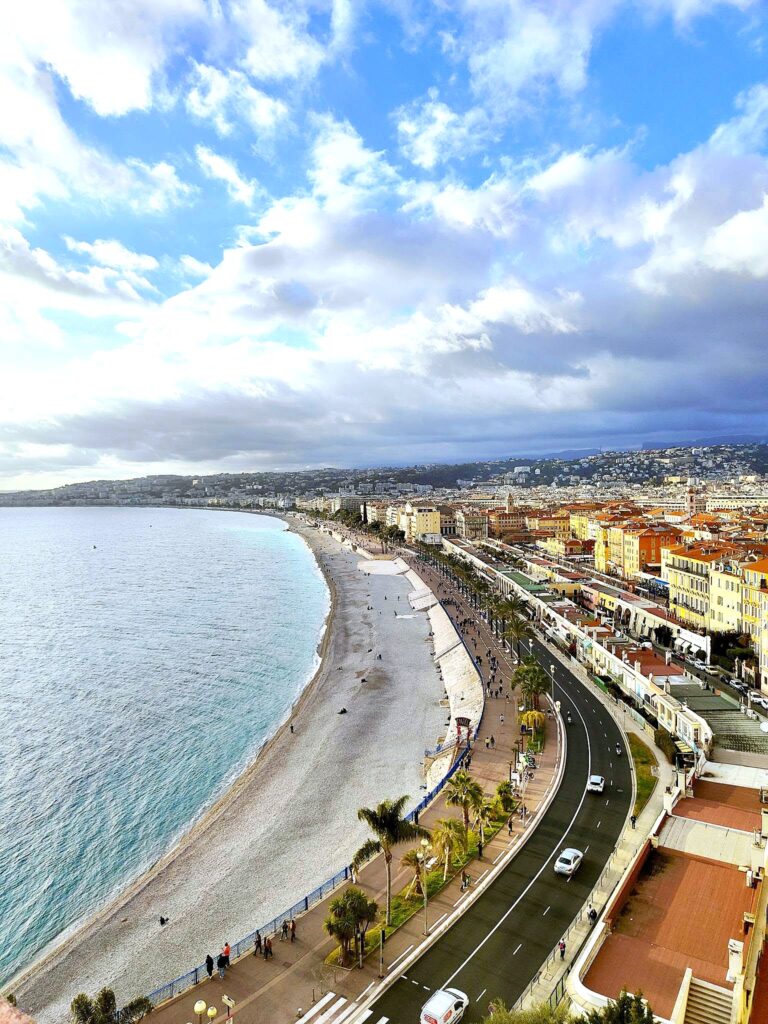
It is impossible to visit Nice without discovering the Promenade des Anglais. The history of this emblematic site began in the 19th century, when it was merely a rough, stony path. Its construction began between 1822 and 1824 at the initiative of the British Reverend Lewis Way. Following the annexation of Nice to France, the path was renamed the Promenade des Anglais in 1860.
The construction of the Belle Époque luxury hotels began towards the end of the 19th century. Today extending over 7 kilometres, the Prom’, as it is affectionately known by the people of Nice, runs from the left bank of the Var River to the Quai des États-Unis. It was added to the UNESCO World Heritage List on 27 July 2021.
It is a must-visit meeting place for rollerblading, jogging and cycling enthusiasts. In addition to its famous events, including the Nice Carnival, the avenue is renowned for its famous “blue chairs”, the perfect spot for admiring the Baie des Anges.
Relaxing on the beaches of the Baie des Anges
The Prom’ is one of the Riviera’s seaside avenues offering the greatest number of beaches—around twenty in total. Between public beaches and private establishments, there is an exceptionally wide choice.
The free public beaches are equipped with showers and toilets and offer a more local, sporty or family-friendly atmosphere. They include Plage du Centenaire, Plage de la Réserve and Plage de Carras.
Private beaches offer sun loungers, parasols and restaurants with table service. If you are looking for a lively atmosphere, head to Beau Rivage, Blue Beach or Plage de l’Opéra.
Enjoying relaxing moments on the blue chairs
The Promenade des Anglais would not be what it is without its famous “blue chairs”. A place to relax and an iconic symbol of Nice, these seats have been an integral part of the city’s landscape since the 1950s. Designed by Charles Tordo, they allow visitors to admire the Baie des Anges in comfort.
Discovering the Palais de la Méditerranée and the Hôtel Negresco
As you stroll along the Promenade, you will discover its architectural symbols from the Belle Époque and the Roaring Twenties.
First, stop in front of the Palais de la Méditerranée, inaugurated in 1929 and designed by architects Charles and Marcel Dalmas for the American billionaire Frank Jay Gould. Despite being rebuilt, it has retained its spectacular white marble Art Deco façade, decorated with sculpted bas-reliefs depicting marine figures.
A little farther on stands the legendary Hôtel Negresco, inaugurated in 1913 under the direction of Henri Negresco and designed by architect Édouard-Jean Niermans. Listed as a historic monument and awarded the “Entreprise du Patrimoine Vivant” label, this museum hotel is famous for its pink dome, attributed to the workshops of Gustave Eiffel; its lounges decorated with more than 6,000 works of art, including the official portrait of Louis XIV by Hyacinthe Rigaud; and its doorman in period costume, who embodies the excellence of French hospitality.
Taking a break in the Jardin Albert Ier
As you make your way towards Old Nice, enjoy a shaded break in the Jardin Albert Ier, one of the city’s oldest public parks. Created in the 19th century, it forms a genuine link between the sea and Place Masséna.
This botanical green space is home to centuries-old palm trees, carob trees and lush Mediterranean vegetation. Be sure to admire the Théâtre de Verdure, an iconic venue that has hosted legends such as Édith Piaf and Iron Maiden, as well as the famous 19-metre-high monumental steel sculpture, the Arc de 115.5°, created by Nice-born artist Bernar Venet.
Visiting the Musée Masséna
Conclude this cultural immersion by passing through the gates of Villa Masséna, a magnificent Italian Neoclassical residence built between 1898 and 1901 by architect Hans-Georg Tersling for Prince Victor d’Essling, grandson of Nice-born Marshal André Masséna.
Set in landscaped gardens designed by Édouard André, this municipal museum tells the fascinating story of Nice, from its annexation to France in 1860 to the golden age of winter tourism and aristocratic holidays.
Among its treasures of art and historical memorabilia, you will discover Napoleon I’s death mask, a dictionary of the Nice dialect and Empress Eugénie’s tiara.
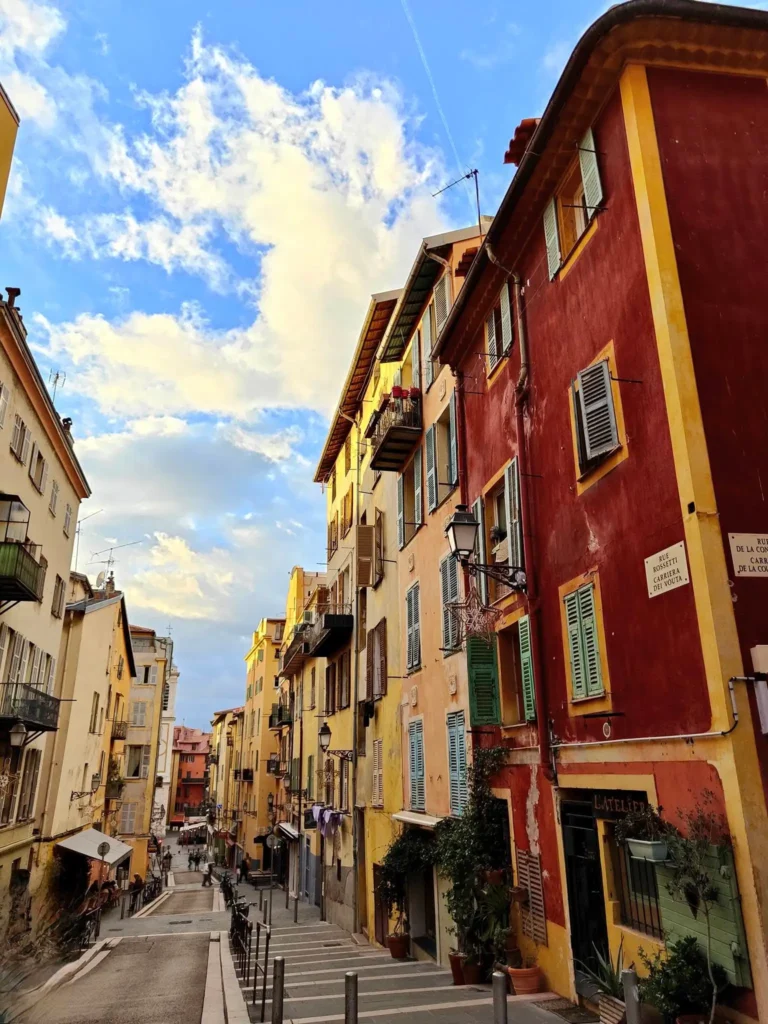
The historic heart of Nice, Old Nice was shaped over the centuries by Italian, Provençal and Savoyard influences before the city was definitively annexed to France in 1860.
The upper town, which became the heart of the district, appeared in the 11th century on the slopes of Castle Hill as a refuge from the Saracens. The House of Savoy subsequently took control in the 14th century, accounting for the city’s Italian roots.
Between 1642 and 1790, Nice experienced its Baroque golden age, which led to the construction of churches and palaces such as Sainte-Réparate Cathedral and the Palais Lascaris.
Today, this pedestrian district has become a must-see destination, where history meets the Nice interpretation of the dolce vita.
Place Saint-François and its treasures
At the centre of Old Nice, Place Saint-François is home to remarkable architectural heritage, including the Palais Communal, a Baroque-inspired building that served as Nice’s town hall until 1868.
The district is also home to the former Franciscan convent, which was transformed into a performance venue for the Théâtre National de Nice (TNN). At its summit stands the Tour Saint-François, rising 50 metres above the ground and listed as a historic monument.
Another must-see attraction on Place Saint-François is the fish market, an institution held every morning except Monday. It offers an impressive variety of seafood, including sea bass, sea bream, sardines, prawns and mussels.
Cours Saleya, the beating heart of Old Nice
An unmissable pedestrian esplanade lined with ochre and pastel façades, Cours Saleya embodies the gentle Mediterranean way of life.
Every morning except Monday, the famous flower, fruit and vegetable market—listed among France’s outstanding markets by the National Council of Culinary Arts—sets up its stalls beneath colourful awnings.
Here, you will discover the richness of the Riviera’s local produce: Picholine olives, Menton lemons, freshly baked pissaladières and the famous socca cooked on a copper plate.
On Mondays, the square is transformed into a large flea and antiques market.
Be sure to admire the Chapelle de la Miséricorde, dating from the 18th century and considered a masterpiece of Nice Baroque architecture, designed by architect Bernardo Vittone. Also worth seeing is the former home of Henri Matisse at number 9, where the painter lived during the 1920s.
Place Rossetti and Sainte-Réparate Cathedral
Conclude this historical journey by arriving at Place Rossetti, a genuine open-air theatre nestled in the heart of the old town.
A favourite meeting place for enthusiasts of artisan ice cream, including the legendary Fenocchio ice-cream parlour, established in 1966, the square is dominated by the majestic Sainte-Réparate Cathedral.
Built between 1650 and 1699 by architect Jean-André Guibert, the cathedral is dedicated to Nice’s patron saint. Listed as a historic monument, it stands out for its restored Baroque façade, its glazed-tile dome inspired by Genoese architecture and its 18th-century bell tower.
Inside, the richness of its ten side chapels and gilded stucco ornaments illustrates the triumph of the Counter-Reformation and the artistic heritage left by the House of Savoy.
Perched on a hill north-east of Nice city centre, Cimiez is a historic residential district whose origins date back to the 1st century BC.
The construction of the city of Cemenelum was ordered by Emperor Augustus. At the time, the city had several arenas, a major thermal complex and numerous ancient streets, many remains of which can still be seen today.
After a period of decline during the Middle Ages, the hill experienced a revival in the 19th century, becoming a favourite holiday destination for European kings and queens, including Queen Victoria and King Edward VII.
During the same period, architect Sébastien-Marcel Biasini created Boulevard de Cimiez, which became the district’s main thoroughfare.
Today, Cimiez is a highly sought-after residential area, home to numerous historic buildings, luxury hotels and museums.
Art at the Musée Matisse
Located in a 17th-century Genoese villa in Cimiez since 1963, the Musée Matisse traces the artistic journey of the great French painter.
The permanent collection presents some of his principal works, including paintings, prints, sculptures and books illustrated by the artist, as well as his personal belongings. One of the major works representing Fauvism is The Portrait of Madame Matisse.
Visitors can also admire other works, including Tahiti I (1935) and La Verdure (1935–1943).
The Monastery of Cimiez and its garden
Founded in the 9th century by Benedictine monks before being taken over by Franciscan friars in the 16th century, the Monastery of Cimiez is one of Nice’s most important spiritual and heritage sites.
The Church of Notre-Dame de l’Assomption is admired for its Baroque altarpiece and houses three major masterpieces of medieval painting attributed to Louis Bréa, a leading figure of the Nice School.
After leaving the church, continue your visit to the Monastery Garden, a former monks’ vegetable garden redesigned as a magnificent Italian-style garden.
Lined with old rose bushes, flower-covered pergolas and citrus trees, this park offers a peaceful setting and an exceptional panoramic view over the Baie des Anges, Castle Hill and central Nice.
The adjoining cemetery is home to the graves of several notable figures who left their mark on the district, including painters Henri Matisse and Raoul Dufy.
Cimiez’s architectural gems
Strolling along Cimiez’s broad, tree-lined avenues allows visitors to admire the lavish heritage of aristocratic holidaymaking at the end of the 19th century.
One of the district’s unmissable buildings is the magnificent Excelsior Régina Palace, built between 1895 and 1897 by architect Sébastien-Marcel Biasini to accommodate Queen Victoria of the United Kingdom and her court during their winter stays.
With its monumental Neoclassical façade, wrought-iron ornamentation, domed crown and extensive private grounds, the building embodies the splendour of the Belle Époque. Today, it has been converted into residential apartments.
A little farther down the boulevard, discover the Alhambra, a former hotel with spectacular Neo-Moorish architecture designed by Jules Sioly in 1900. It is recognisable by its minarets and horseshoe arches inspired by Oriental architecture.
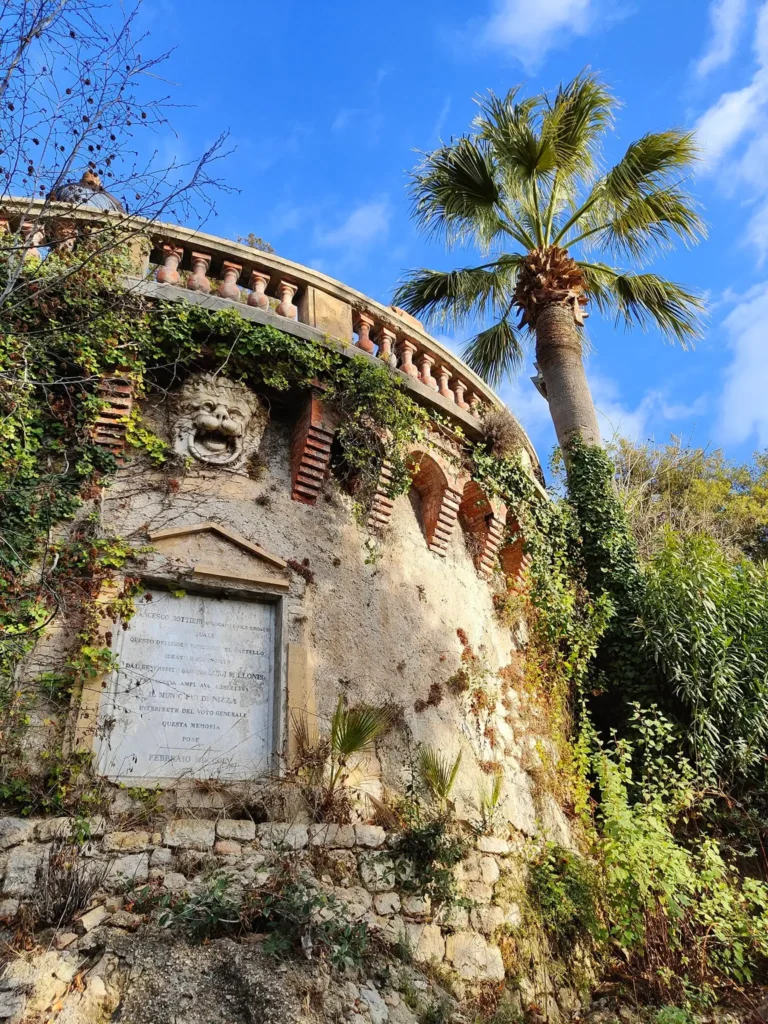
The historic birthplace of Nice, Castle Hill has its origins in Antiquity. The Phocaean Greeks chose this strategic site to establish the trading post of Nikaïa several millennia ago.
Between the 11th and 18th centuries, the Count of Provence ordered the construction of the Château de Nice on the heights. The building endured several sieges between 1531 and 1691 before being definitively destroyed in 1706 on the orders of Louis XIV.
After decades of ruins, the hill was redeveloped in the 19th century into a vast public park covering more than 20 hectares. It has become an essential stop for discovering the soul of Nice.
The site can be reached via the Lesage staircase or by the Art Deco-style lift.
● Admiring the artificial waterfall
At the heart of Castle Hill, the Cascade du Château brings freshness and tranquillity to the wooded park. It is ideal for a relaxing walk accompanied by the gentle sound of flowing water.
This water feature was designed in 1885 to regulate the waters of the Vésubie Canal. Today, it forms part of the UNESCO World Heritage Site and is popular for its spectacular views over Old Nice and the Baie des Anges.
Enjoying the remarkable view from Tour Bellanda
Attached to Castle Hill, Tour Bellanda offers one of the finest views over the Baie des Anges thanks to its ideal location.
This historic monument and observation point was built between 1825 and 1826 in a Romantic style. The tower houses a small museum that recounts the history of Castle Hill through dioramas and figures in period costume.
Discovering the Castle Cemetery and archaeological remains
The Castle Cemetery is considered one of the most beautiful cemeteries in Nice and is often regarded as an open-air museum.
It was established in 1783 on the orders of King Victor Amadeus III of Sardinia. Several tombs of different origins can be found there, as well as a Jewish section.
Notable figures buried there include Mercedes founder Emil Jellinek, writer Gaston Leroux and René Goscinny, the author of Asterix and Obelix.
Your driver will take you back to your hotel, your address or your preferred drop-off location. The return journey brings the tour to a peaceful conclusion.
Included:
- Private vehicle(s) of your choice
- English- and French-speaking chauffeur-guide with knowledge of the region; other languages available on request
- Four-hour half-day tour
- Pick-up at your address
- Drop-off
- Fuel and tolls
- Free cancellation up to 24 hours before departure
Not included:
- Entrance fee to Villa Masséna, approximately €10
- Entrance fee to the Musée Matisse, approximately €10
- Entrance fee to the Musée National Marc Chagall, approximately €8
- Meals
- Gratuities, at your discretion
- Specialist guide, available on request only
Choose your vehicle
Premium vehicles for optimal comfort.

Mercedes E-Class
Premium Class
Mercedes VAN 8 pax
Premium Class
Mercedes V-Class
Premium Class
Mercedess S-Class
Premium Class
Mercedes Sprinter
Premium Class
Mercedes VIP Sprinter VAN
Premium ClassConfigure your trip
Please enter your trip details below.
Select a vehicle to see the price.